

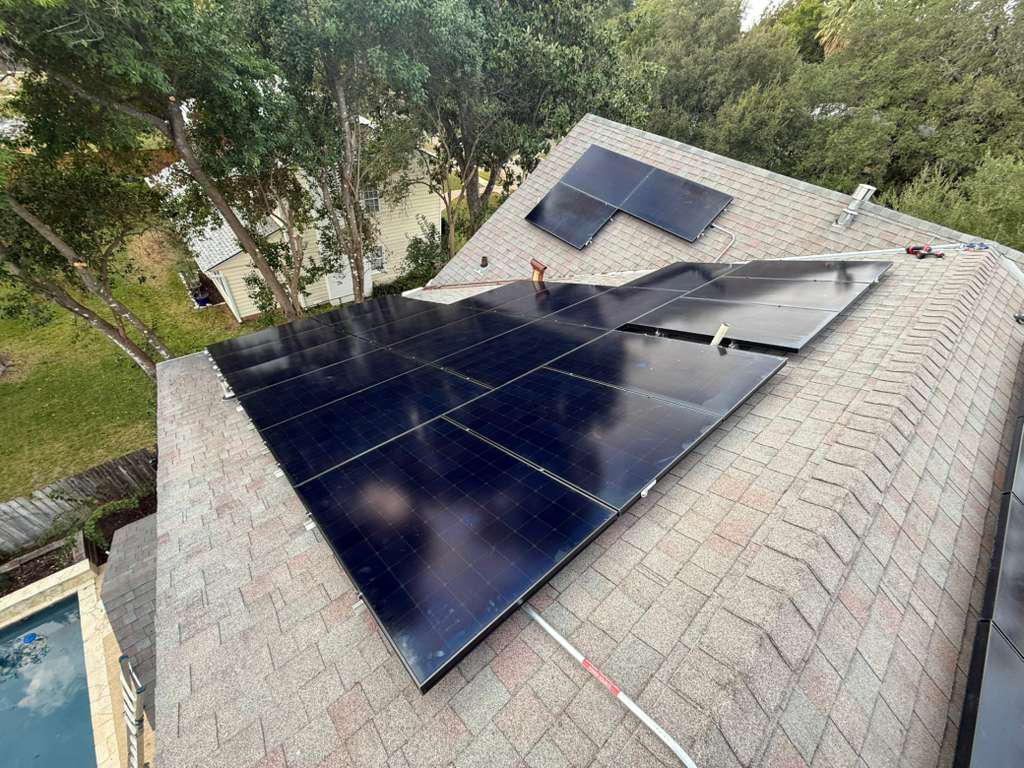
Yes, solar can still be worth it in Texas in 2026, but the math is slower and more personal than it was. The 30% federal homeowner tax credit ended for systems completed after December 31, 2025, so a Fort Worth homeowner buying today pays the full price. Whether that price pays back in roughly 10 to 15 years or drags past 20 now depends mostly on your electricity use, your buyback plan and how much of your solar power you use yourself.
This guide walks through what changed, what a typical Fort Worth system costs as of October 2026, how to run honest payback math without the credit, and when a lease or power purchase agreement (PPA) can make more sense than buying.
What changed for Texas solar in 2026?
The biggest change is that the residential clean energy credit under IRC §25D is gone for new installs. The One Big Beautiful Bill Act (P.L. 119-21, signed July 4, 2025) ended the credit for expenditures made after December 31, 2025, and the IRS treats an expenditure as made when installation is completed. A homeowner who pays cash or finances a system in late 2026 gets no federal credit.
The details are spelled out in the IRS bulletin on the expired energy credits and the Congressional Research Service summary. Two nuances matter:
- If you installed a system in 2025 or earlier and could not use all of your credit, the unused portion can still carry forward on future returns.
- The §25C energy-efficiency credit, which covered items like heat pumps and insulation, also ended after 2025.
What did not change is just as important. Texas still has no statewide net metering rule, Texas still exempts the added value of solar from property taxes, and DFW summers still produce some of the highest air-conditioning loads in the country. Those factors now carry the whole case for solar.
How much does solar cost in Fort Worth as of October 2026?
As of mid-2026, EnergySage data puts the average installed price in Fort Worth at about $2.19 per watt before any incentives. At that price, a 13 kW system, which is a common size for a larger DFW home, comes to roughly $28,500. Battery storage averages about $993 per kWh of capacity on top of that.
You can see the local numbers on EnergySage’s Fort Worth solar cost page. Real quotes vary with roof complexity, panel and inverter choice, whether a main panel upgrade is needed and whether the roof should be replaced first. If your roof is within a few years of replacement, it is usually cheaper to do that before panels go on than to remove and reinstall them later. Our roof replacement team can tell you honestly where yours stands.
What is a realistic solar payback period without the tax credit?
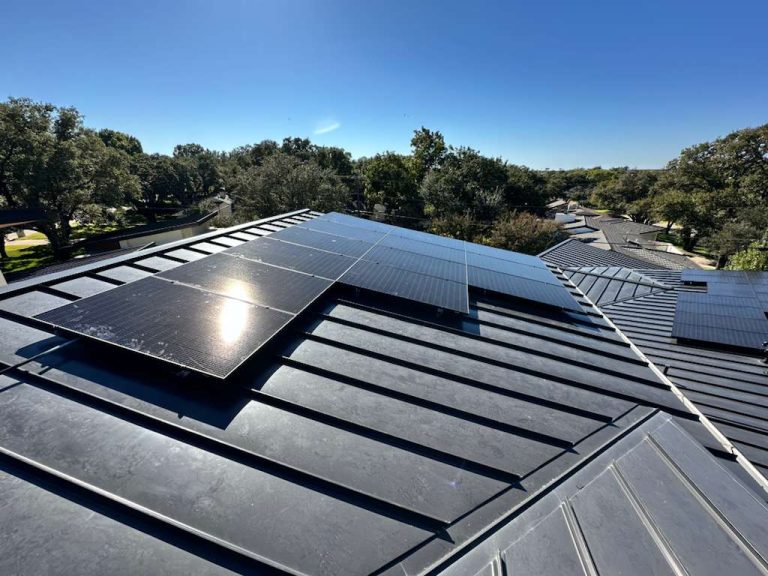
For a typical Fort Worth home, simple payback without the federal credit often lands somewhere around 10 to 15 years, and it can run longer. The biggest swing factor is how your retail electric provider credits the power you send back to the grid. Panels themselves are commonly warrantied for 25 years, so a long payback can still be a net gain.
Here is an illustrative example. It is not a quote, and every input below should be replaced with your own numbers:
- System: 13 kW at $2.19/W, about $28,500 before incentives.
- Production: roughly 1,350 to 1,500 kWh per installed kW per year in North Texas, depending on orientation and shade. You can model your own roof with NREL’s free PVWatts calculator. We will use about 18,000 kWh per year.
- Your all-in electric rate: check your bill by dividing the total charge by the kWh used. We will use 15 cents per kWh for illustration.
- Self-consumption: the share of solar you use at the moment it is produced. We will assume 60%, which is plausible for a home running AC during the day.
| Buyback scenario (illustrative) | Estimated annual value | Simple payback on $28,500 |
|---|---|---|
| Exports credited at full retail (1:1) | About $2,700 | About 10.5 years |
| Exports credited at half of retail | About $2,150 | About 13 years |
| Exports earn nothing | About $1,600 | About 18 years |
The table shows why the buyback plan matters almost as much as the panels. It also leaves out two things that usually help: electricity rates tend to rise over time, and the home itself may be worth more with an owned system. It also leaves out things that can hurt, like inverter replacement or a plan change that cuts your export credit. Treat any payback number, including ours, as a range rather than a promise.
How do Texas solar buyback plans affect whether solar is worth it?
Most of DFW is in Oncor’s delivery territory, where Oncor owns the poles and meters but your retail electric provider (REP) sets the buyback terms. Because Texas has no statewide net metering, the value of exported power ranges from a full retail credit to nothing at all, depending on the plan you choose.
Every plan’s terms are on its Electricity Facts Label (EFL), which you can pull up on the state’s Power to Choose site. Read for how exports are credited, whether credits roll over or expire, and whether there are monthly caps. Homes in co-op or municipal territory, such as CoServ, Tri-County Electric Cooperative or Denton Municipal Electric, follow that utility’s own rules instead.
Timing also matters. According to Oncor’s solar FAQ, your installer applies for interconnection, Oncor issues Permission to Operate (PTO), the meter is reprogrammed about three weeks after PTO, and export data reaches your REP 30 to 60 days after PTO. Plan your switch to a buyback plan around that window.
Does solar raise property taxes in Tarrant or Denton County?
No. Texas Tax Code §11.27 exempts the added appraised value of a solar energy device from property taxes. To claim it, file Comptroller Form 50-123 with your county appraisal district, either the Tarrant Appraisal District or the Denton Central Appraisal District for most of our customers.
The form is available from the Texas Comptroller. This exemption is one of the few incentives that did not change in 2026, and it is easy to forget. Ask your installer for the equipment details you need to fill it out.
Should you buy or lease solar in Texas in 2026?
Buying usually delivers the most value over 25 years if you can pay cash or get a reasonable loan, because you keep all the savings. A lease or PPA can make sense in 2026 if you want little or no upfront cost, because the leasing company may still be able to claim a commercial federal credit that homeowners can no longer use.
That commercial credit, under §48E, is claimed by the company that owns the system, not by you. Based on the current law, residential solar owned by a third party can qualify if construction began by July 4, 2026, or if the system is placed in service by December 31, 2027. Whether a provider passes any of that value on to you through a lower monthly price is up to them, so ask directly how it shows up in your pricing, and confirm the tax side with a tax professional.
| Factor | Cash or loan purchase | Lease or PPA |
|---|---|---|
| Upfront cost | Full system price, or a loan | Often little or nothing |
| Federal credit in 2026 | None for the homeowner | Provider may claim a commercial credit |
| Who keeps the savings | You keep all of it | You pay a monthly fee or per-kWh rate |
| Price escalators | None | Some contracts rise each year |
| Selling your home | System transfers with the house | Buyer must qualify and assume the contract |
| §11.27 property-tax exemption | Applies to your system | Ask how the contract handles it |
Before signing a lease or PPA, read for annual escalators, the term length, what happens at the end of the contract, who handles roof work and how a home sale is handled. A lease that saves you money today but rises 3% a year can cost more than buying over its full term.
Who is solar still a good fit for in DFW?
Solar tends to pencil out best for DFW homes with high summer usage, a sun-facing roof with little shade, a roof that will not need replacement soon, and an owner who plans to stay at least ten years. Pairing it with a good buyback plan, or a battery that stores midday power for evening use, improves the math further.
You are likely a strong candidate if several of these are true:
- Your summer bills regularly top $250 to $300 and your annual use is well above 12,000 kWh.
- You have south- or west-facing roof planes with few trees, which is common in newer neighborhoods in Haslet, Northlake, Justin and Roanoke.
- You plan to stay in the home long enough to reach payback.
- You care about backup power, since panels plus a battery can keep essentials running when the grid is down.
Solar is a weaker fit if your roof is heavily shaded, you expect to move in a few years, or your usage is already low. In those cases, efficiency upgrades or a smaller system may be the better first step.
Does adding a battery make solar more worth it?
A battery adds cost, about $993 per kWh on average in Fort Worth as of mid-2026, but it can raise the value of every solar kWh you produce. It stores midday power for the evening, when ERCOT’s grid is tightest, and it keeps your home running during outages, which panels alone cannot do.
ERCOT’s tightest hours are now around 8 to 9 p.m., after solar output fades. A battery lets you use your own stored power during that window instead of buying from the grid, which matters most on plans that credit exports at less than retail. Prometheus is a certified FranklinWH installer, and our battery backup page explains how a system like the aPower 2 pairs with solar. For a deeper comparison, see our guide on solar batteries for DFW homes.
How can you check whether solar is worth it for your home?
Start with 12 months of usage, which you can download from Smart Meter Texas or your REP. Then get a quote with production estimates for your actual roof, price out two or three buyback plans on Power to Choose, and run payback with and without exports earning full credit. If the middle case still works, solar is likely worth it.
Our solar power systems page outlines what we look at during an assessment.
If you want a straight answer for your own roof and bills, reach out to Prometheus Power Solutions and we will run the numbers with you.
Prometheus Power Solutions · Fort Worth, TX
See what solar would actually save your home
Get straight answers on cost, production and payback for your roof — from a local Fort Worth team.
Book a Free ConsultationCall 817-523-9029
★★★★★ 5.0 on Google · Serving all of Dallas–Fort Worth
Frequently Asked Questions
Can I still get the 30% solar tax credit in Texas in 2026?
No. The federal residential credit under §25D ended for systems completed after December 31, 2025. A homeowner who buys solar in 2026 gets no federal credit. Unused credits from a system installed in 2025 or earlier can still carry forward. Confirm your situation with a tax professional.
How long does solar take to pay off in Fort Worth without the tax credit?
Often around 10 to 15 years, but it can be longer. At about $2.19 per watt as of mid-2026, payback depends mostly on your usage, your all-in electric rate and how your retail electric provider credits exported power.
Will solar panels raise my property taxes in Tarrant County?
No. Texas Tax Code §11.27 exempts the added value of solar from property taxes. File Form 50-123 with the Tarrant Appraisal District, or with the Denton Central Appraisal District if you live in Denton County.
Is leasing solar a better deal now that the homeowner credit is gone?
It can be for some homeowners. A leasing company may still claim a commercial credit it can reflect in pricing, but you do not keep all the savings and some contracts include annual escalators. Compare total cost over the full term before deciding.