

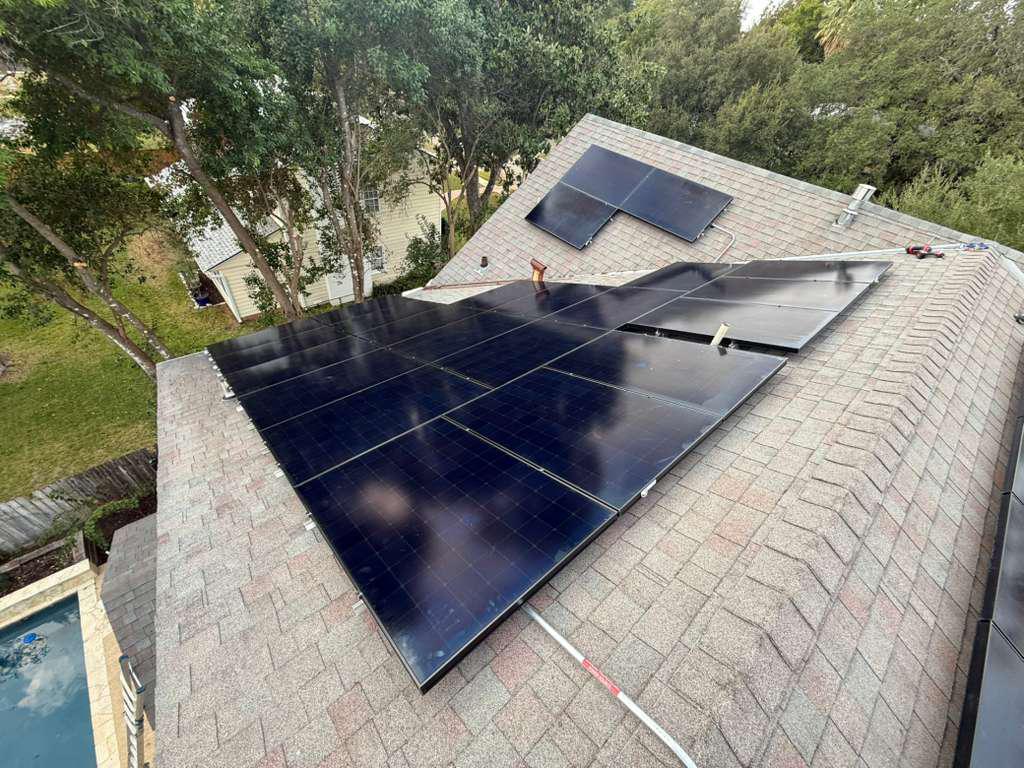
The federal residential solar tax credit — the 30% “solar tax credit” under IRC Section 25D — ended for systems completed after December 31, 2025. A DFW homeowner who buys solar or a battery with cash or a loan in 2026 gets no federal credit. What Texas homeowners can still use: carryforward of credits from earlier installs, lease and PPA pricing that may reflect the provider’s commercial credit, the Texas property tax exemption for solar, a good buyback plan, and smart financing.
If you’ve been reading older articles or hearing “30% back” in sales pitches, this guide explains what changed, what it means for a 2026 purchase, and which incentives and savings levers are still real for homeowners in Fort Worth, Dallas, and the surrounding metroplex.
What Happened to the Solar Tax Credit
For years, the residential clean energy credit (Section 25D) let homeowners take 30% of the cost of solar panels, battery storage, and related labor off their federal income tax. Under the Inflation Reduction Act it was scheduled to stay at 30% through 2032.
That schedule no longer applies. The One Big Beautiful Bill Act (Public Law 119-21, signed July 4, 2025) repealed the credit early. Section 25D now ends for expenditures made after December 31, 2025, according to the IRS and the Congressional Research Service.
The detail that tripped up a lot of homeowners: under IRS rules, an expenditure is “made” when installation is completed, not when you sign the contract or pay a deposit. A system that was contracted in fall 2025 but finished in January 2026 does not qualify.
The related energy-efficiency credit for things like heat pumps, windows, and insulation (Section 25C) also ended after 2025.
What This Means If You Buy Solar in 2026
If you pay cash or take out a loan for a home solar or battery system in 2026, there is no federal credit to claim on your return. That has a few practical consequences:
- The price you pay is the price you pay. Any quote that shows a “net cost after 30% credit” for a 2026 install is using outdated math.
- Payback periods are longer than the estimates you may have seen before 2026, because the full system cost has to be recovered through bill savings.
- Loans built around a “tax credit paydown” at month 18 no longer make sense for new buyers — there’s no credit check coming to make that payment.
- Battery-only installs no longer get a federal credit either. Their value now rests on backup power and bill management.
If a salesperson tells you the credit is “still in place for 2026,” ask them to show you the IRS guidance in writing — and then talk to a tax professional before you sign.
Carryforward: If You Already Claimed the Credit
Homeowners who completed a qualifying system in 2025 or earlier still get the credit they earned. And because 25D was nonrefundable, many people couldn’t use the whole amount in one year. That unused portion still carries forward to future tax years.
For example, if your 2024 install generated a $9,000 credit and you only had $5,000 of federal tax liability that year, the remaining $4,000 rolls forward. Make sure your tax preparer is carrying it on Form 5695 each year until it’s used up. The repeal stopped new credits; it did not erase credits already earned.
Leases, PPAs, and the Commercial Credit (48E)
There is one way federal incentives can still touch a home solar system: third-party ownership. In a solar lease or power purchase agreement (PPA), a company owns the equipment on your roof and you pay them monthly or per kWh. Because the company is the owner, it may be able to claim the commercial clean electricity investment credit under Section 48E.
Under the 2025 law, solar projects remain eligible for that commercial credit if construction began by July 4, 2026, or if the system is placed in service by December 31, 2027. Battery storage follows a different phase-out schedule, and the details are still being sorted out — so ask rather than assume.
What that means for you as a homeowner:
- You do not claim anything. The leasing company does.
- Any benefit reaches you only through the lease or PPA price. Ask the provider directly whether they expect to claim a federal credit on your system and how it shows up in your rate.
- Read the escalator clause (how much your payment rises each year), the contract length, the buyout terms, and what happens if you sell the house.
- Confirm the tax treatment with a tax professional — not the salesperson.
A lease can make sense for some homeowners, but it trades ownership and long-term savings for a lower upfront cost. Compare it carefully against owning.
The Texas Property Tax Exemption (Still in Place)
Texas has no state income tax, so there has never been a state solar income tax credit. But Texas does offer a meaningful benefit that the federal repeal didn’t touch: the property tax exemption under Texas Tax Code §11.27.
The added value a solar energy device brings to your home is exempt from property tax. Solar can add real market value to a house, and without the exemption you’d pay tax on that value every year. To claim it, file Comptroller Form 50-123 with your county appraisal district — Tarrant, Dallas, Denton, Collin, or wherever your home sits. Keep your invoice and equipment specs handy.
Buyback Plans: Where Much of the Value Lives Now
With no federal credit for new buyers, the electricity plan you pair with solar matters more than ever. Texas has no statewide net metering. In the deregulated parts of DFW served by Oncor, your retail electric provider (REP) decides whether and how much it pays for the solar power you send back to the grid.
- Some plans credit exports at or near the retail energy rate. Others pay a lower fixed or wholesale-based rate. Some pay nothing.
- Check each plan’s Electricity Facts Label (EFL) on PowerToChoose.org for export credit terms, caps, and base charges.
- If you’re served by a co-op or municipal utility — Denton Municipal Electric, CoServ, Tri-County, and others — that utility sets its own rules.
A battery changes this math. Instead of exporting midday surplus at a low rate, you can store it and use it in the evening, when ERCOT’s tightest hours now fall (roughly 8–9 p.m., after solar output fades). Our battery backup systems page covers how that works in practice.
Financing Without the Credit
Financing used to be built around the credit. In 2026 it should be built around your actual cash flow:
- Cash still has the simplest math — no interest, no dealer fees — but it now has to pay back entirely through savings.
- Solar loans can work, but always ask for the cash price and the financed price side by side. Dealer fees are often built into financed prices.
- Home equity loans or HELOCs can offer lower rates and let you pay the cash price. They’re secured by your home, so weigh that carefully.
- Leases and PPAs may carry the provider’s commercial credit, as described above.
Whatever you choose, ask for a payback estimate that shows its assumptions: system cost before any incentives, expected production, your electricity rate, and the buyback rate it assumes.
Other Texas Rules Worth Knowing
A few state-level protections and process changes still work in homeowners’ favor:
- HOAs: Under Texas Property Code §202.010, most HOAs cannot prohibit rooftop solar, though they can regulate some aspects such as placement and can bar devices on common areas or above the roofline.
- Faster permitting: Texas SB 1202 (effective September 1, 2025) lets home solar, battery, and backup power projects use third-party plan review and inspection, which can shorten city approval times.
- Interconnection: In Oncor territory, your installer applies for interconnection, and you can’t turn the system on for export until Oncor issues Permission to Operate (PTO).
Does Solar Still Make Sense in DFW Without the Credit?
For many homes, yes — but the case is different. Without 30% off, solar is a longer-term investment, and the strongest projects pair it with high electricity use, a good roof, a solid buyback plan, and plans to stay in the home. A battery adds a different kind of value: keeping the lights, fridge, and AC running during outages like Winter Storm Uri in February 2021 or the May 2024 Dallas storm that knocked out power for more than 800,000 Oncor customers.
Fort Worth solar averages roughly $2.19 per watt installed according to EnergySage — around $28,500 for a 13 kW system, before any incentives. Get quotes that show that full price clearly, and see our solar power systems page for what goes into a DFW install.
If you want an honest, no-credit-assumed look at whether solar, a battery, or both fit your home, reach out to Prometheus Power Solutions for a free consultation.
Prometheus Power Solutions · Fort Worth, TX
Get real numbers for your home — not a sales pitch
We'll walk you through costs, buyback plans and financing options that fit your situation.
Book a Free ConsultationCall 817-523-9029
★★★★★ 5.0 on Google · Serving all of Dallas–Fort Worth
Frequently Asked Questions
Is there still a federal solar tax credit in 2026?
Not for homeowners who buy. The residential solar tax credit (Section 25D) ended for systems completed after December 31, 2025. Leasing companies may still claim a commercial credit on systems they own.
I signed my solar contract in 2025 but it was installed in 2026. Do I qualify?
Generally no. The IRS treats the expenditure as made when installation is completed, so a system finished in 2026 does not qualify. Confirm your situation with a tax professional.
Can I still use a solar credit I earned before 2026?
Yes. If you couldn’t use your full credit in the year you installed, the unused amount still carries forward to future tax years on Form 5695.
What Texas incentives still apply to home solar?
The Texas property tax exemption (Tax Code §11.27) still applies — file Form 50-123 with your county appraisal district. Your REP’s buyback plan and HOA protections under Property Code §202.010 also matter.