

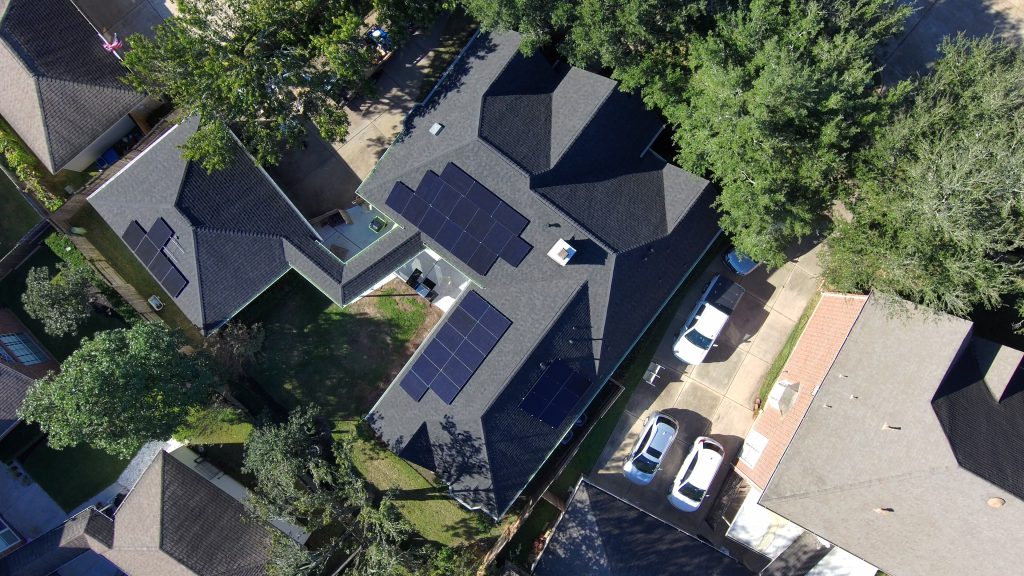
Residential solar installation in Dallas-Fort Worth typically costs about $2 to $3 per watt before any incentives. Recent Fort Worth averages are close to $2.19 per watt, so a 13 kW system comes to roughly $28,500. The federal homeowner tax credit ended after 2025, so for a 2026 cash or loan buyer, that sticker price is close to the real cost. This guide explains what drives the price, what a quote should include and how financing, buyback plans and property tax fit in.
What You’re Actually Paying For
A residential solar installation is more than panels on a roof. It is a regulated electrical project that ties into your home’s wiring, your utility’s grid and your city’s building department. A solar quote pays for:
- Equipment: panels, inverters or microinverters, racking, flashing, wiring and monitoring hardware.
- Labor: roof work plus licensed electrical work to connect the system to your service panel.
- Soft costs: engineering drawings, permit fees, HOA paperwork, utility interconnection and inspection coordination.
- Possible add-ons: a main panel upgrade, critter guards, battery storage or roof repairs.
Soft costs are a bigger share of the price than most people expect. That is one reason two quotes for systems that look the same can be thousands of dollars apart.
DFW Solar Installation Costs in 2026
EnergySage’s mid-2026 data for Fort Worth shows an average around $2.19 per watt installed. Using that as a midpoint, here is roughly how system size turns into price, before any incentives:
| System size | Typical home | Approx. cost at ~$2.19/W |
|---|---|---|
| 6 kW | Smaller or very efficient home | ~$13,000 |
| 10 kW | Average DFW single-family home | ~$21,900 |
| 13 kW | Larger home, pool or EV | ~$28,500 |
Real quotes will vary. Small systems often cost more per watt because permits, design and travel are spread over fewer panels. Tricky roofs (steep pitch, tile or many angles), long conduit runs and panel upgrades all push prices up.
Equipment Choices That Move the Price
Panels with low temperature coefficients hold their output better in Texas heat. They cost a little more up front but usually pay that back in summer production. Microinverters cost more than a single string inverter, but they give you panel-level monitoring and handle partial shade better. A hybrid inverter or battery-ready design costs a bit more now and saves money if you plan to add storage later.
Adding a Battery
Home battery storage averages roughly $993 per usable kWh installed in the Fort Worth area, so a 15 kWh battery is roughly $15,000 before incentives. Batteries are not required for solar to work. But they let you keep your own solar power for evenings and outages instead of selling it cheaply to the grid. Our battery backup systems page covers how they pair with solar.
The Federal Tax Credit Is Gone for Homeowners
Many solar articles still say “30% back.” That is no longer true for homeowners. The One Big Beautiful Bill Act, signed July 4, 2025, ended the residential clean energy credit (IRC §25D) for spending made after December 31, 2025. The IRS treats the spending as made when installation is completed, not when you sign. So a system finished in 2026 does not qualify, even if the contract was signed in 2025. If you claimed the credit for an earlier system and still have an unused amount, that carryforward still applies.
What this means for you:
- Be skeptical of any 2026 quote that subtracts a federal credit to show a lower “net cost.”
- Leases and PPAs are different. The leasing company may be able to claim a commercial credit under §48E. For solar, that generally applies to projects that began construction by July 4, 2026 or are placed in service by the end of 2027. Ask how much of that benefit shows up in your rate.
- Talk to a tax professional about your own situation before you count on any credit.
Ways to Pay: Cash, Loan, Lease or PPA
Cash gives you the lowest total cost and the fastest payback. You own the system and every kWh it makes.
Solar loans let you own the system with little or nothing down. Watch for dealer fees. Some “low-rate” loans build a substantial dealer fee into the system price. Ask for the cash price and the financed price side by side.
Leases and PPAs mean you pay a monthly amount or a per-kWh rate to a company that owns the panels. Up-front cost is low, and the provider may pass along some commercial credit value. But you give up ownership, and the contract can complicate selling your home. Read escalator clauses carefully.
How You Get Paid for Extra Solar
Texas has no statewide net metering. In Oncor territory, which covers most of DFW, your retail electric provider (REP) decides what you are paid for power you send to the grid. Some plans credit exports well, some pay a wholesale-based rate and some pay nothing. Every plan has an Electricity Facts Label (EFL) on PowerToChoose.org that spells out the buyback terms. Read it before you choose.
Co-op and city utilities, such as CoServ, Tri-County Electric and Denton Municipal Electric, set their own rules. If one of them serves your home, your installer should size the system around that utility’s policy.
Oncor reprograms your meter about three weeks after Permission to Operate. Export data reaches your REP 30 to 60 days after PTO, so your first bills after going live may not show credits yet.
Paperwork That Protects Your Investment
Property Tax Exemption
Texas Tax Code §11.27 exempts the added value of a solar system from property tax. File Form 50-123 with your county appraisal district (Tarrant, Denton, Dallas and so on) so the exemption is applied.
Faster Permits Under SB 1202
Since September 1, 2025, Texas law lets home solar and battery projects use qualified third-party plan review, with city approval due by the third business day after the third-party notice. That cuts soft-cost delays, though each city still handles inspections.
HOA Rules
Texas Property Code §202.010 generally stops HOAs from banning solar, though they can regulate some aspects of where panels go. Your quote should include preparing the HOA submission.
How Long the Process Takes
Plan on 6 to 12 weeks from contract to Permission to Operate. That covers 1 to 2 weeks of design, a few weeks of permitting, 1 to 3 days of installation, then inspection and Oncor approval. For a step-by-step walk-through, see our guide on what to look for in a DFW solar power company.
A Pricing Checklist Before You Sign
- Price shown both in total and per watt (DC).
- Exact panel, inverter and racking models listed.
- Permits, engineering, HOA paperwork and interconnection included.
- Any panel upgrade or roof work priced separately and explained.
- Cash price shown next to any financed price.
- No federal tax credit subtracted for a 2026 homeowner purchase.
- A first-year production estimate in kWh you can compare across quotes.
When you’re ready to see real numbers for your roof, contact Prometheus Power Solutions for an itemized quote with no pressure.
Prometheus Power Solutions · Fort Worth, TX
See what solar would actually save your home
Get straight answers on cost, production and payback for your roof — from a local Fort Worth team.
Book a Free ConsultationCall 817-523-9029
★★★★★ 5.0 on Google · Serving all of Dallas–Fort Worth
Frequently Asked Questions
How much does solar installation cost in Dallas-Fort Worth?
Most DFW homes pay roughly $2 to $3 per watt before incentives. Fort Worth averages about $2.19 per watt, or about $21,900 for a 10 kW system and $28,500 for a 13 kW system.
Can I still get a federal tax credit for solar in 2026?
Not as a homeowner who buys the system. The §25D credit ended for installations completed after December 31, 2025. Leased or PPA systems may carry commercial credits claimed by the provider, so ask how they affect pricing and check with a tax professional.
Does Texas have net metering?
No statewide net metering exists. In Oncor territory, your retail electric provider’s plan sets the buyback rate, which you can read on the plan’s Electricity Facts Label at PowerToChoose.org. Co-ops and city utilities set their own rules.
Will solar panels raise my property taxes in Texas?
No. Texas Tax Code §11.27 exempts the added value from solar from property tax. File Form 50-123 with your county appraisal district to claim it.