

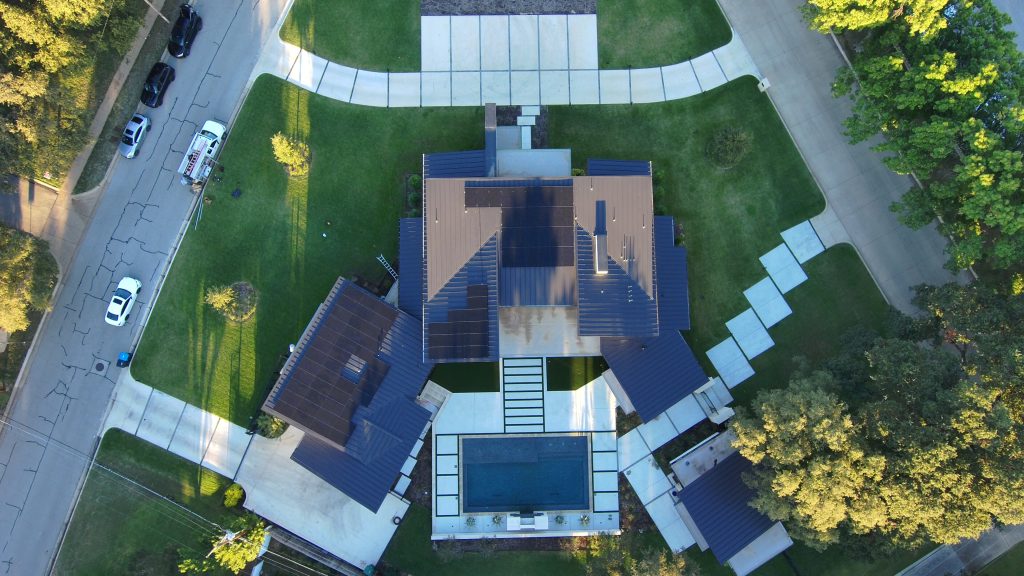
For most Fort Worth-area homes on the Oncor grid, going from signed contract to a fully working solar system takes roughly two to three months, though it can be faster or slower depending on HOA review, permitting and utility approval. The physical installation usually takes only a few days. The rest of the timeline is design, approvals, inspection and Oncor’s Permission to Operate (PTO).
Homeowners in Keller, Haslet, Saginaw, North Richland Hills and across North Texas are often surprised that their panels sit on the roof, finished, for weeks before they can switch them on. That waiting period is normal, and it exists for safety and grid reasons. This guide walks through each step of the Oncor solar interconnection process as of October 2026, what you can do to keep things moving, and why you should never turn the system on early.
How long does solar installation take in Texas?
Installation itself typically takes one to three days for a residential system, or a bit longer with batteries. The full project, from contract to power-on, commonly runs about 6 to 12 weeks in DFW. The biggest variables are HOA approval, city permitting, inspection scheduling and the utility’s interconnection review, not the work on your roof.
Every project is different, so treat the timeline below as a typical range rather than a promise. Weather, equipment availability and the completeness of paperwork all play a role.
What are the steps from contract to power-on?
The typical sequence is site survey and design, HOA approval if needed, utility interconnection application, city permit, installation, city inspection, Oncor Permission to Operate, meter reprogramming, and finally enrolling in a buyback plan with your retail electric provider. Several steps can overlap, which is how good installers shorten the overall timeline.
| Step | Who handles it | Typical time (estimate) | Notes |
|---|---|---|---|
| 1. Site survey and system design | Installer | 1–2 weeks | Roof measurements, shading, electrical panel review, final layout |
| 2. HOA approval (if applicable) | Homeowner + installer | Varies widely; often 2–6 weeks | Texas Property Code §202.010 generally prevents HOA solar bans |
| 3. Oncor interconnection application | Installer | Submitted during design/permitting | Equipment must meet UL 1741 / IEEE 1547 |
| 4. City building/electrical permit | Installer | Days to a few weeks | SB 1202 third-party review can speed backup-power permits |
| 5. Installation | Installer | 1–3 days | Longer with batteries or roof work |
| 6. City inspection | City inspector | Days to 2 weeks | Scheduling depends on the city |
| 7. Oncor Permission to Operate (PTO) | Oncor | Varies; often a few weeks | Do not energize before PTO |
| 8. Meter reprogramming | Oncor | About 3 weeks after PTO | Allows the meter to record exported energy |
| 9. Export data to your REP / buyback enrollment | Oncor, REP, homeowner | 30–60 days after PTO | Buyback credit depends on your REP plan |
Meter and data timing come from Oncor’s renewables FAQ. Other durations are general industry estimates for North Texas, not guarantees.

How does Oncor solar interconnection work?
Your installer submits an interconnection application to Oncor describing your system and equipment. Oncor reviews it, and you sign an interconnection agreement. After the system is installed and passes city inspection, Oncor issues a Permission to Operate letter, which is your green light to turn the system on. Equipment must meet UL 1741 and IEEE 1547.
Oncor is the transmission and distribution utility (TDU) for most of the Dallas–Fort Worth area, including much of Fort Worth and many surrounding suburbs. Oncor owns the poles, wires and meters; it does not sell you electricity. That’s your retail electric provider’s job. Some North Texas homes, including parts of Denton County, are served by municipal utilities or co-ops such as Denton Municipal Electric, CoServ or Tri-County Electric, which set their own interconnection rules. Check your electric bill if you’re not sure.
What is Oncor Permission to Operate (PTO)?
Permission to Operate is Oncor’s written approval to energize your solar system and connect it to the grid. It confirms the system was installed as approved, passed local inspection and meets interconnection standards. Until you receive PTO, your system should stay off, even if the installation is finished and the city has signed off.
Your installer typically receives the PTO letter and will let you know when it arrives, then walk you through startup. Keep a copy of the PTO letter and interconnection agreement with your home records. You’ll want them if you sell the house, add batteries or change equipment.
Why shouldn’t you turn on solar before PTO?
Energizing a grid-tied system before Permission to Operate can violate your interconnection agreement, create safety risks for utility line workers and lead to billing problems, because your meter may not yet be set up to record exported energy correctly. Wait for written PTO, even if the panels have been sitting on the roof for weeks.
Certified inverters are designed to shut down when the grid goes down, which protects crews working on lines. But Oncor’s review is about more than one safety feature: it confirms the whole installation matches what was approved. Turning on early can complicate or delay the final approval. If you want power during outages before or after PTO, the right solution is a properly installed battery system with an automatic transfer function; see our battery backup systems page.
What happens after PTO: meter and buyback?
After PTO, Oncor reprograms your smart meter, which typically happens about three weeks later, so it can record energy you send to the grid. Export data then reaches your retail electric provider about 30 to 60 days after PTO. To get paid for exported power, you need a REP plan that offers solar buyback.
Texas has no statewide net metering. In deregulated areas served by Oncor, the value of your exported solar depends entirely on your retail electric provider’s plan. Rates and terms vary widely; some plans credit exports at or near the retail rate, others at a lower wholesale-based rate, and some don’t buy back at all. Compare plans on PowerToChoose.org and read the Electricity Facts Label (EFL) for each one before switching. Don’t switch plans mid-contract without checking cancellation fees.
How does Texas SB 1202 affect permitting timelines?
Texas SB 1202, effective September 1, 2025, lets homeowners use a qualified third-party reviewer or inspector for home backup power installations such as batteries and generators. Once the third party notifies the city of approval, the city must issue the permit no later than the third business day. Cities differ on how they apply it to standalone solar.
The enrolled text of SB 1202 defines a home backup power installation as an electric generating facility, energy storage facility or standby system, plus associated equipment, serving a one- or two-family home at 600 volts or less. Several North Texas cities, including North Richland Hills, have published third-party review procedures. Some cities treat solar without storage as outside the law’s scope, so ask your installer which path applies in your city. SB 1202 does not change Oncor’s interconnection process or PTO.
How can you speed up the solar timeline?
Respond quickly to document requests, start HOA approval early, sign the interconnection agreement promptly, and make sure someone can provide access for the city inspection. Choosing an installer that handles HOA packets, permits and Oncor paperwork in-house removes the most common delays. Adding batteries or a roof replacement adds steps, so plan them together.
- Gather documents early: a recent electric bill (with your ESI ID), HOA rules and survey or plat if you have one.
- Submit to the HOA early: it can run in parallel with design and permitting. See our guide to Texas HOA solar rules for what to include.
- Fix roof issues first: if your roof is aging, replacing it before solar avoids a costly detach-and-reset later. We handle both through our roof replacement services.
- Pick your buyback plan before PTO: compare REP plans while you wait so you’re ready when the meter is reprogrammed.
- File your property-tax exemption: Texas Tax Code §11.27 exempts the added value of solar; file Form 50-123 with your county appraisal district between January 1 and April 30.
What does solar cost in Fort Worth in 2026?
As of October 2026, EnergySage data puts Fort Worth solar at about $2.19 per watt before any incentives, or roughly $28,500 for a 13 kW system. The federal homeowner solar tax credit ended for systems installed after December 31, 2025, and under IRS guidance the expenditure counts when installation is completed, not when the contract is signed.
That last point matters for timelines: a project signed in 2025 but completed in 2026 does not qualify for the homeowner credit. See the IRS bulletin on the residential clean energy credit and EnergySage’s Fort Worth pricing. Leases and PPAs may still carry commercial credits the provider claims; ask how that’s reflected in pricing and talk to a tax professional. Explore our solar power systems to see how we design for North Texas homes.
Ready to map out your own timeline? Contact Prometheus Power Solutions in north Fort Worth, and we’ll walk you through every step from design to Oncor PTO.
Prometheus Power Solutions · Fort Worth, TX
See what solar would actually save your home
Get straight answers on cost, production and payback for your roof — from a local Fort Worth team.
Book a Free ConsultationCall 817-523-9029
★★★★★ 5.0 on Google · Serving all of Dallas–Fort Worth
Frequently Asked Questions
How long does Oncor take to give Permission to Operate?
It varies with application volume and whether paperwork is complete, but PTO commonly arrives within a few weeks after the system passes city inspection. Your installer tracks the application and notifies you when PTO is issued.
Can I use my solar panels before Oncor approves them?
No. Keep a grid-tied system off until you receive written Permission to Operate. Energizing early can violate your interconnection agreement and cause metering and safety problems.
When will I start getting credit for exported solar?
Oncor typically reprograms your meter about three weeks after PTO, and export data reaches your retail electric provider about 30 to 60 days after PTO. Credits depend on your REP’s buyback plan, since Texas has no statewide net metering.
Does SB 1202 speed up solar permits in Fort Worth?
It can for home backup power installations like batteries and generators. After a qualified third party approves the plans, the city must issue the permit within three business days. Ask your installer how your city applies it to solar-only systems.